Review: SIX The Musical at the Theatre Royal
Review by Alison Stoddart
Six queens deliver a great Sydney night out when a noisy opening night of celebrities mingled with pre-teen girls who knew every lyric, and provided a crowd which knew it was going to have a good time. To a Theatre Royal Sydney audience primed for a royal occasion, SIX delivered.
Written in 2017 for the Edinburgh Fringe and premiering in the West End in 2019, the show is a comparatively recent creation by Toby Marlow and Lucy Moss. The references in its performance, its theatrical style and musicality are up to the minute, even if its subjects are five hundred years old. This is history as you’ve not seen it before.
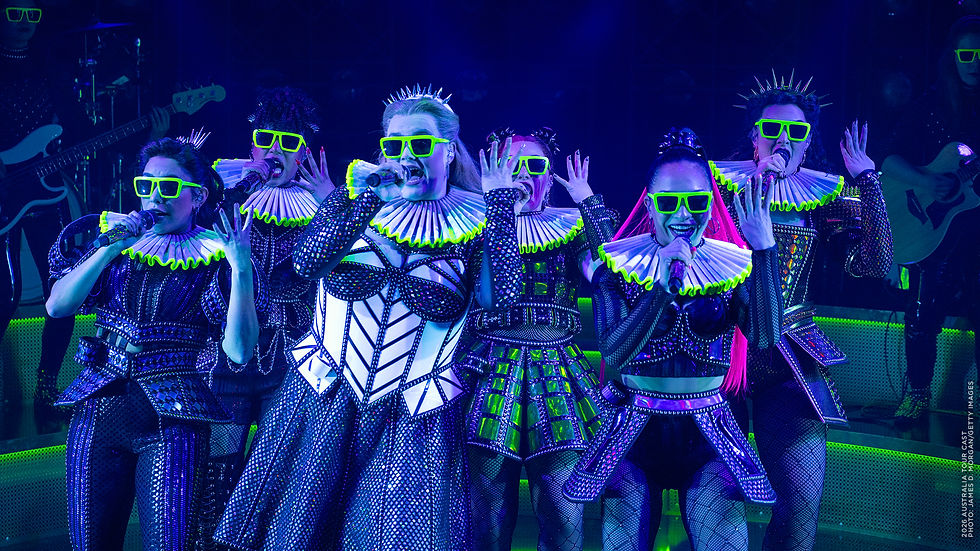
SIX reimagines the wives of Henry VIII as modern divas competing in song to determine who suffered most at the hands of their notorious husband. It’s an accurate Tudor history lesson – but delivered in sequins, stomping boots and high energy attitude. Think stadium pop concert with a helping of teenage bedroom karaoke.
The performance structure is simple – give each queen a pop anthem (or ballad) to tell her story, reflect her personality and tell of her predicament.
Sarah Murr blows open the stage to kick off as Catherine of Aragon, slyly gesturing encouragement to the audience to build her applause, loosening the fourth wall and setting the rules of engagement. Mia Paris Scalise in radiant green delivers an Anne Boleyn who starts mischievously and continues to deliver asides to the audience throughout the performance. Her rebellious energy and some good one-liners are well received. Kadesa Honeyhill’s Anna of Cleves on towering heels radiates the required confidence and sass, and Angela Brischetto brings impressive popstar looks and swagger to Katherine Howard.
The queens costumes sparkle, each with their own colour to aid identification. The choreography is tight and even on this opening night, delivered with punch and force. Special mention of the on-stage four piece band who provide a very muscular musical backbone, with tight drumming and a full sound that fills the room.
Counting off the first couple of the songs by the queens, a flicker of unease comes with the format. With six performers in turn vying for attention, will the evening threaten to become a sort of Tudor’s Got Talent? A succession of increasingly impressive vocal fireworks that overshadow the characters behind them?
Enter Jane Seymour.
Cara Bessey’s performance of Heart of Stone provides an emotional turning point. Bessey brings no less a spectacular one-upmanship, but via something quieter and more vulnerable. Her ballad has the emotional weight to bring the characters back to the forefront, to remind us that these women were not simply victims in elaborate costumes or even just reinvented modern pop divas. Bessey’s quiet hiatus hints a little at the humanity of these historical figures.
Lorinda May Merrypor as Catherine Parr finishes the short runtime by pivoting the show to the empowerment finale. Her performance and delivery of I Don’t Need Your Love dismantles the plot’s “competition”. The Parr character recognises that the queens are defining themselves through their marriage and measuring their worth by what happened to them rather than who they were.
Merrypor fully breaks the fourth wall to encourage the audience directly to reconsider the story we have been watching. The queens stop competing for the audience’s sympathy and instead reclaim their individual identities. The show’s empowerment manifesto is delivered in a final celebration of female joy and strong choruses.
The result is a slick, exuberant musical that delivers an empowering message without losing sight of the sheer pleasure of a great night at the theatre.