Review: HAIR at the Theatre Royal
Review by Alexa Hafner Keelan
Set in the psychedelic late 1960s, this musical has been beloved for generations. Originally one of the first rock musicals, it helped set the standard for many productions that followed, including classics such as Jesus Christ Superstar.
This musical was first presented at the Biltmore Theatre in 1968 and subsequently opened in Australia in 1969. The musical presents an insightful picture of how a hippie tribe in New York reacted to the stringent rules that prevailed in society. The performance represents a defiance of the Vietnam War and promotes the principles of the Flower Power Movement.
The musical was supposed to break new ground by tackling taboo subjects while getting its message of love across. It is definitely a perfect representation of hippie culture in that it aims at breaking social conventions and promote liberation.
Despite its lack of a conventional structure or narrative, the production was consistently entertaining. Every musical number was hopeful and engaging bringing upon excitement and anticipation for what was coming next.
Claude, played by Alex Cooper, gave an energetic performance that captured the fear of conscription through moments of vulnerability and his desire for freedom. He was well supported by fellow cast members in the central love triangle, with Berger played by Maxwell Simon and Sheila played by Elizabeth Brennan. Jeanie, played by Rosie Meader, was also convincing in her portrayal of the character as a fun-loving and eccentric young woman.
Director Glenn Elston clearly wanted to preserve the original production in terms of its themes and overall message. Despite the difficult subject matter, it still maintained the emotional weight of the themes with a light-hearted and upbeat spirit. It was interesting to witness how, despite its loosely structured narrative the musical was still able to create depth and keep the audience engaged throughout.
It was fascinating how the lighting used in the theatre contributed to the dramatic effect of the musical performance, through the efforts of the designer, Harrison Cope. The lighting included beautiful bright lights and colours helping create an incredible psychedelic effect. It should be noted that recyclable and repurposed materials were used for the set, props and costumes, highlighting the socially conscious nature of the musical.
History played an important role in the performance of the musical. Projections of old historical black-and-white clips, as well as TV shows from those times, including I Love Lucy, allowed us to get a complete picture of what life in the USA looked like in the 1960s amongst hippies.
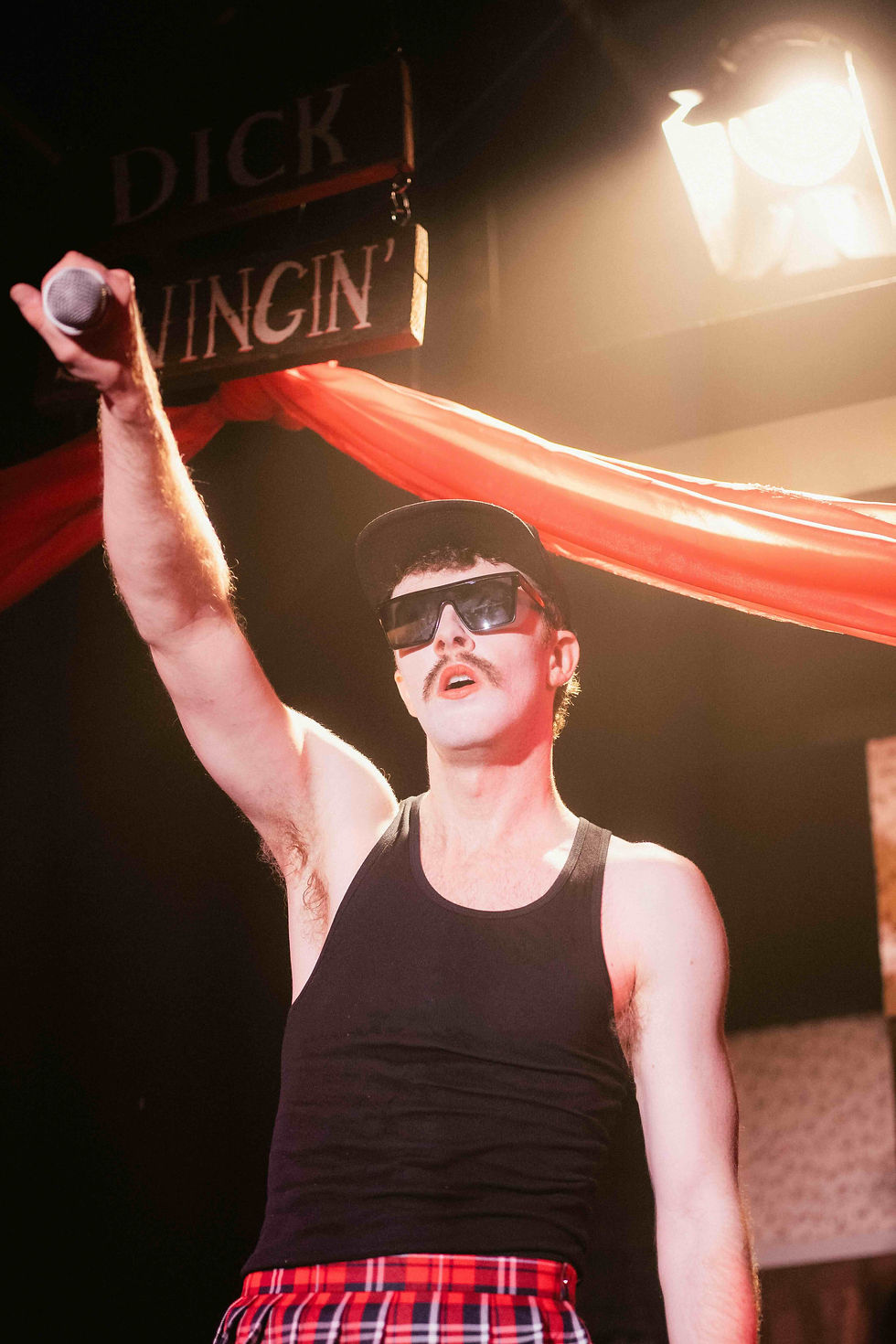
Hud, played by Tane Williams-Accra, delivered a standout vocal performance, bringing both power and passion to the role. His strong stage presence ensured that every musical number he featured in was memorable.
The outstanding live band seated at the back of the stage is also deserving of recognition for the energy with which they made some of the most popular songs like Aquarius, Hair, and Good Morning Starshine come alive.
The choreography done by Sue-Ellen Shook perfectly complemented the set-up. The ensemble moved smoothly between each scene and each musical number, and the ensemble's movements reflected their energy and freedom.
Surprisingly, the musical was also quite amusing, considering the main themes of the musical were very serious. The production incorporated a range of humorous moments and smaller skits that kept the audience entertained, although they were not always fitting. This combination of humour and drama helped the message to be delivered without making it too heavy.
Despite its unconventional narrative structure, Hair remains a powerful and relevant musical today. Through its celebration of peace, love, and unity, it successfully captures the spirit and ideals of a generation. It was an exciting and vibrant production held at the Royal Theatre for a strict season until July 12th.